About Us
KSTD is a quasi-municipal corporation under the laws of the State of Maine, incorporated via Charter in 1971. We proudly serve the City of Waterville (Waterville Sewerage District) as well as the Towns of Winslow, Fairfield, and Benton. KSTD also serves a significant industrial user, Huhtamaki Inc. (formerly Keyes Fiber) and two (2) non-chartered communities that executed inter-local agreements with chartered communities; those being the Town of Oakland in 2013 via Waterville Sewerage District and the Town of Vassalboro via the Town of Winslow in 2017.
Board of Trustees
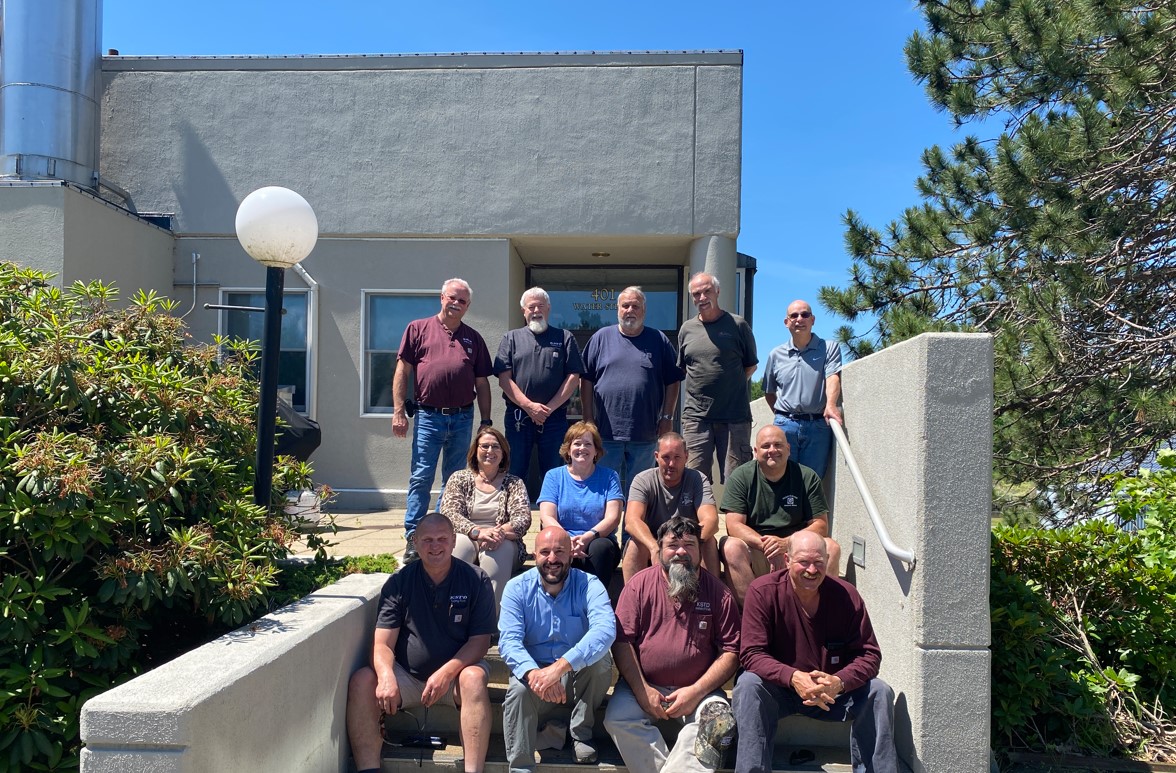
The KSTD Board of Trustees is comprised of 10 Trustees, appointed by respective governing bodies of the communities of which they serve: 5 preresenting Waterville, 2 representing Winslow, 2 representing Fairfield, and 1 representing Benton.
The Board of Trustees are the governing body of the District and oversees the actions of the Superintendent as representatives of their respective communities. They also vote on key decisions of the District including but not limited to issues concerning personnel, annual budget, contracts, procurement of equipment/services, and other District related needs. The Board of Trustees meets monthly on the 2nd Thursday at 7:30 AM. Meetings of administrative, personnel and operations committees are scheduled as needed.

Have a question?
Check out our FAQ below or contact us for more information!

What's our process?
Continue below for more information about our treatment process.
Our Process
Screening and Metering
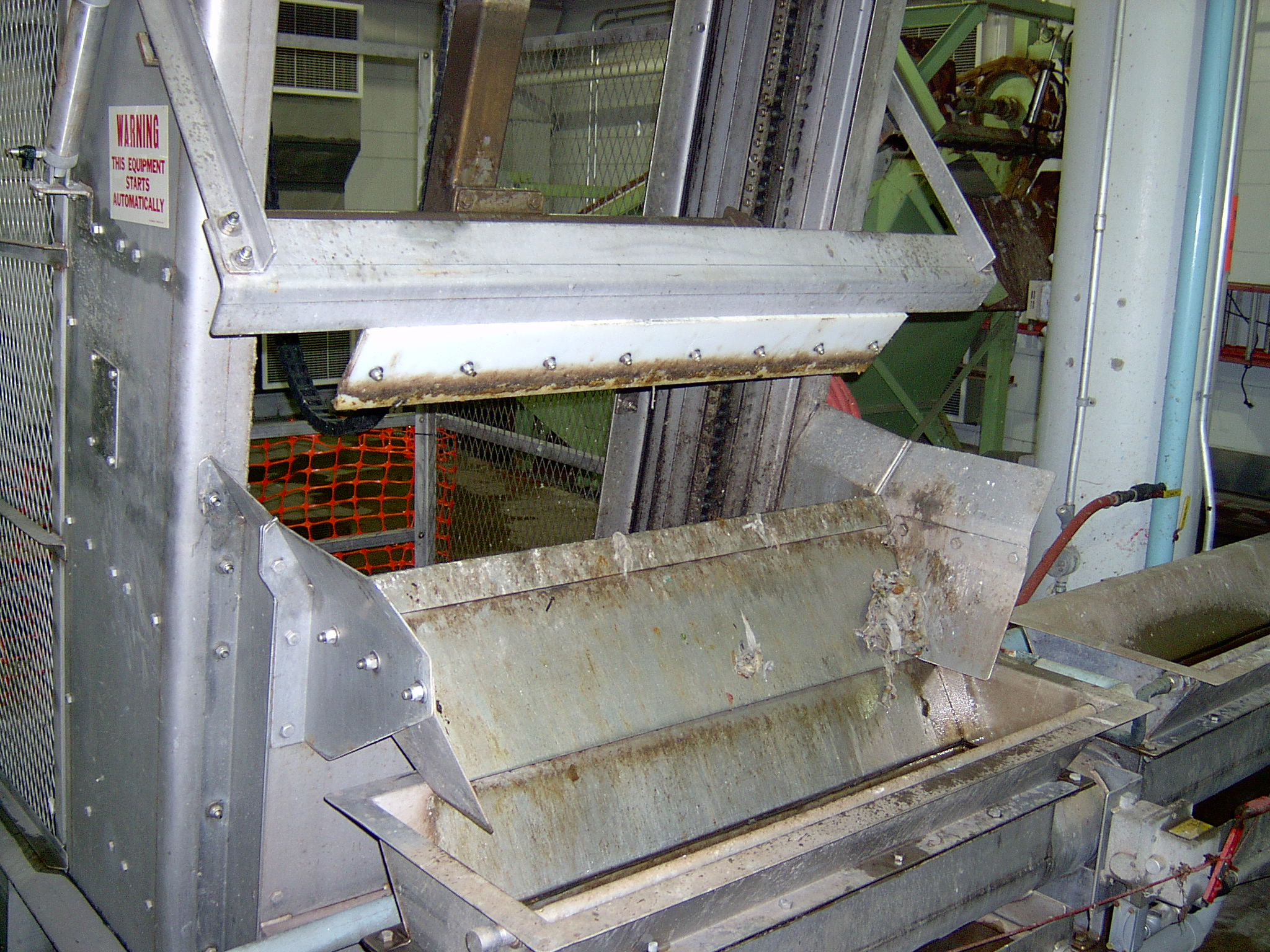
The wastewater is screened and metered as it passes to the next step. Screening of the raw wastewater at the beginning of the treatment process removes large solids, which would damage pumps and other mechanical equipment. The screened material (pieces of wood, bottles, rags etc..) is ultimately hauled away to a landfill for burial. The metering of the wastewater monitors the flows through the plant and serves as one of the criteria for apportioning the districts annual operating maintenance costs.
Primary Sedimentation
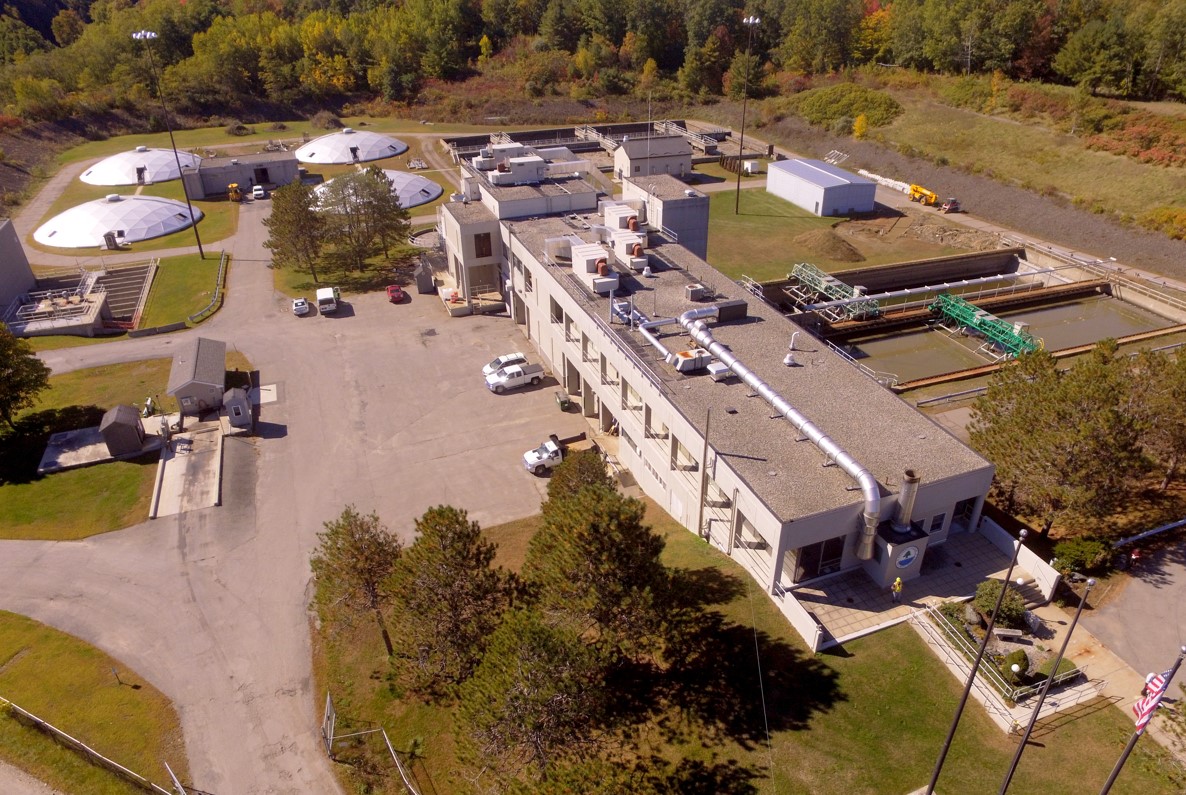
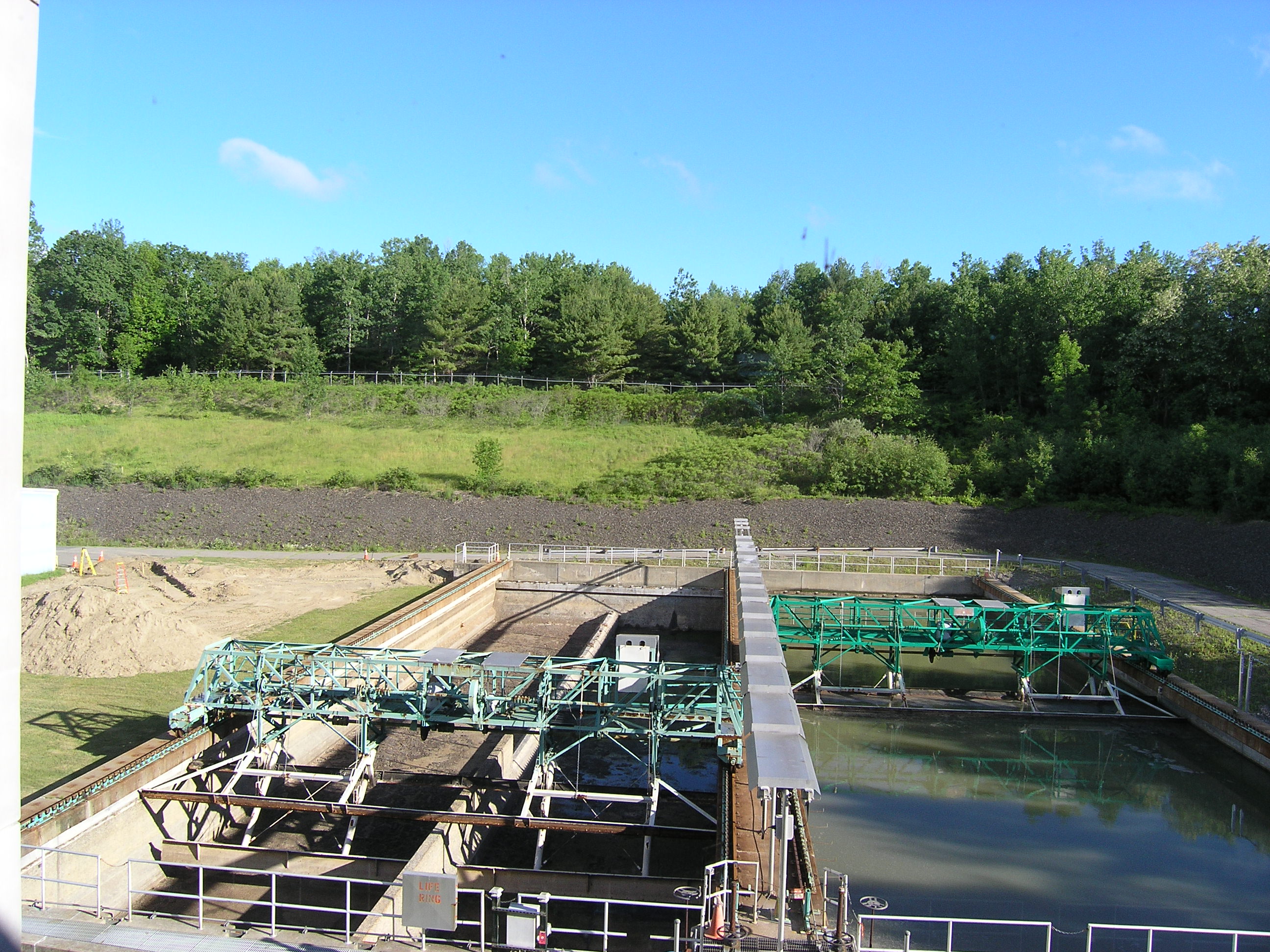
The Wastewater enters the two primary sedimentation tanks which reduces the velocity of the flow. Large rake arms separate settable solids and floating grease and oil from the wastewater. The tanks reduce the heavy solids loading of the wastewater of the subsequent treatment units. The Primary settling basins also remove grit (small, coarse particles of sand, gravel or other matter) from the wastewater to protect equipment. The primary settling basins should remove about 15 to 20 percent of the raw BOD (Biochemical Oxygen Demand) and about 40 percent of the suspended solids. The Grit and sludge are continuously pumped to a cyclone separator. The grit is removed to a sanitary landfill and the sludge is discharged to sludge thickeners.
Aeration
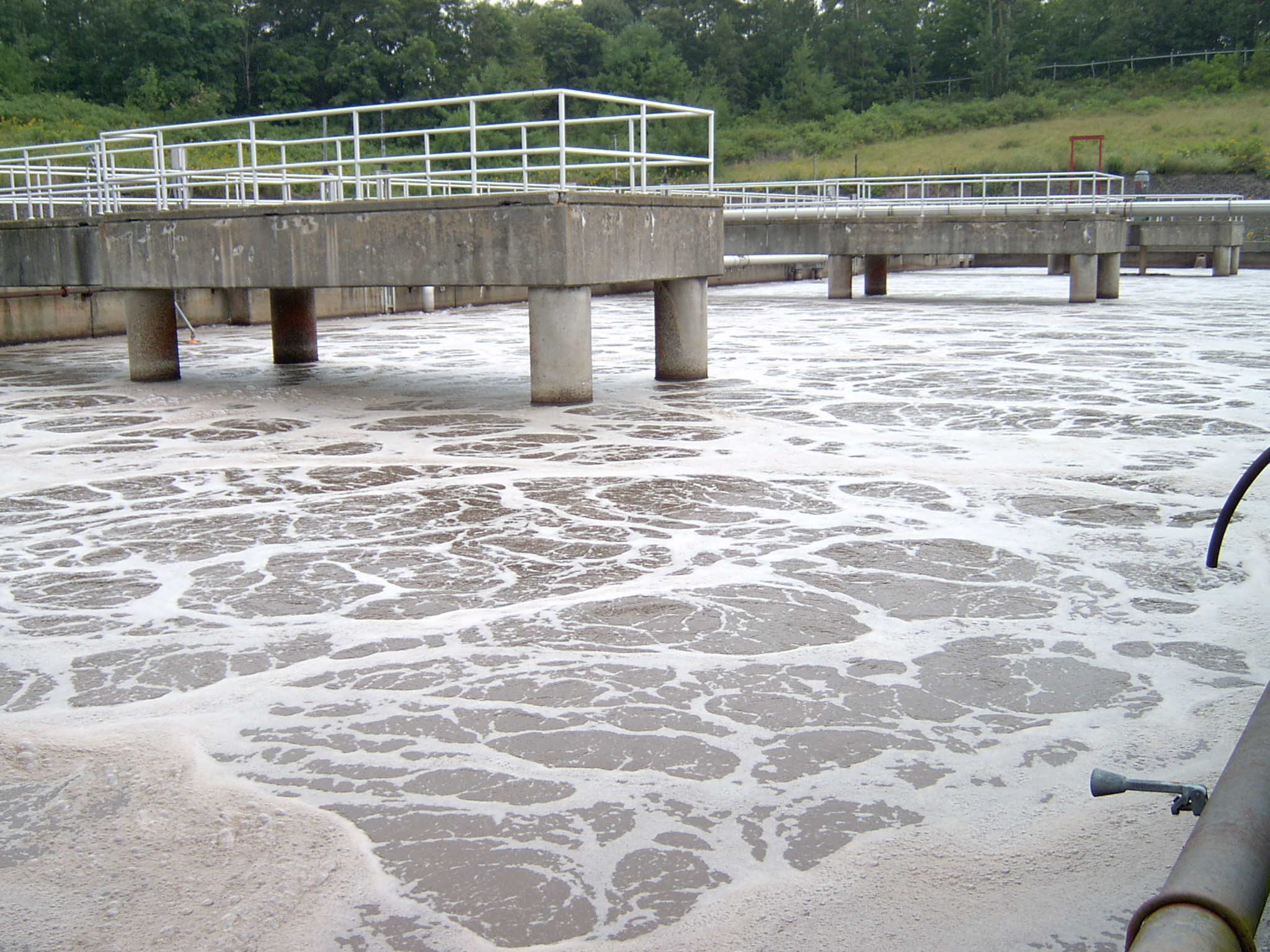
Up to this Point, the process has been a physical system. During aeration, the biological treatment process begins. As the term implies, aeration is the stage where air and the oxygen it contains is introduced into the flow. The bubble aeration system takes compressed atmosphere air and pushes it through the diffuser elements forming millions of fine bubbles which enhances the transfer of oxygen from the air to the microorganisms in the wastewater. The presence of the oxygen enables the microorganisms to reproduce and consume large amounts of the biodegradable matter in the wastewater. The microorganisms and the biodegradable matter are collectively called "activated sludge". Without this oxygen, the aerobic microorganisms would quickly die and septic anaerobic conditions would occur. Retention time of the wastewater in the aeration tank is approximately four hours.
Primary Sludge Thickening
During this Process, the Primary settled sludge is stored for daily dewatering. After grit is removed, the sludge is discharged into the two thickening tanks, where the heavier solids sink to the bottom. Rotating rake arms keep the thickened sludge mixed and pushed in the center hopper. The clarified liquid continuously overflows the tops of the tanks and is returned to the primary tanks for further treatment. The thickened primary sludge is pumped to the belt press for dewatering.
Rotating Drum Thickening
Waste activated sludge (Excess Microorganisms) are removed from the secondary clarifier and are pumped to a rotary drum thickener. The sludge flow enters the thickener and mixes with polymer via the flocculation tank. This polymerized sludge now flows into two rotating sieve drums which allows gravity dewatering. The action of the polymerized sludge gently rotating within the woven polyester fabric covered drum produces a clear filtrate. The dewatered sludge continues through the drum and exits the opposite end as a thickened waste active sludge and then collected in a holding tank. As in the case of the primary sludge, the thickened waste-activated sludge is pumped to the belt press for dewatering.
Belt Filter Press
The thickened primary sludge and thickened waste activated sludge are pumped and blended together with a polymer mixture onto two porous cloth belt presses. Water is removed by gravity as the sludge flows through the cloth and is compressed by rollers. This Process increases the percentage of solids in the sludge from about 5% to 32% solids.
Final Clarification
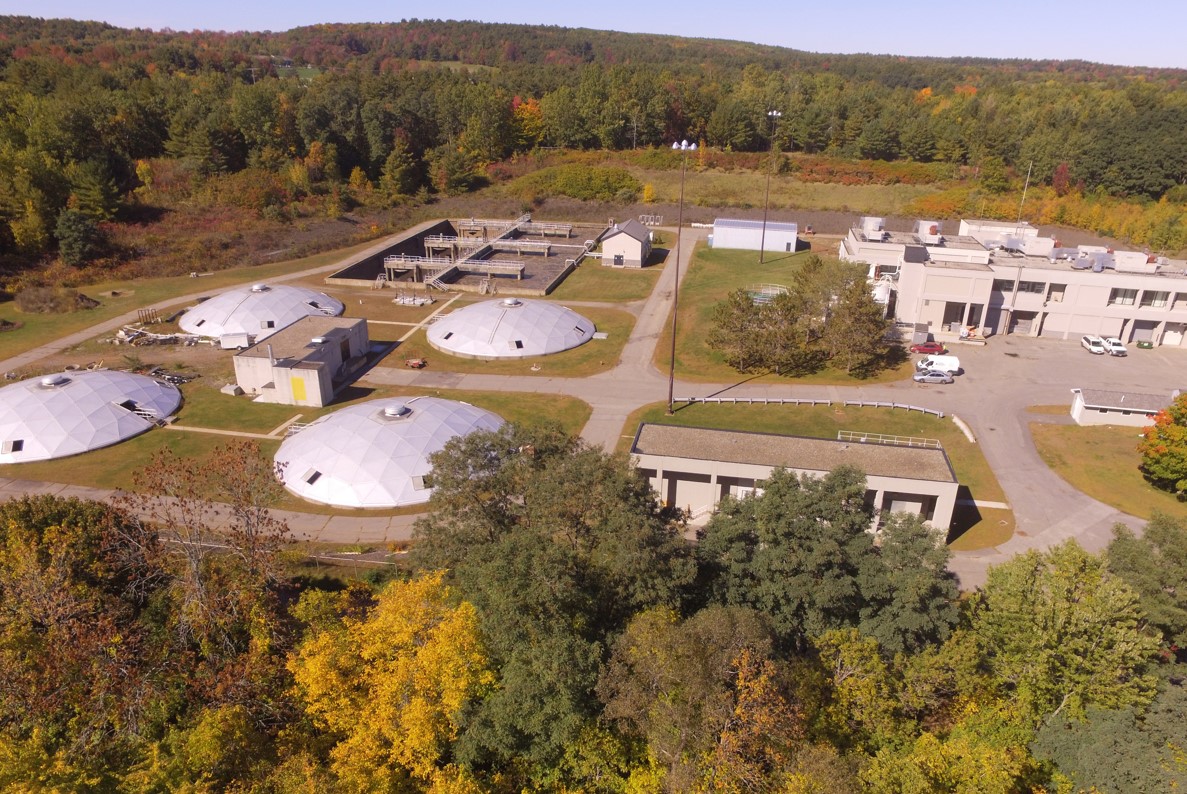
The function of the four large circular basins is to separate the activated sludge from the effluent discharge. Large rake arms siphons the settled sludge from the bottom of the tanks. Also, floating solids are skimmed from the surface of the tank with the rake arms. The settled activated sludge is return to the aeration tank, where the activated sludge is mixed with raw wastewater. Excess sludge (microorganisms) is removed from the process and pumped to the rotating drum thickeners.
Disinfection
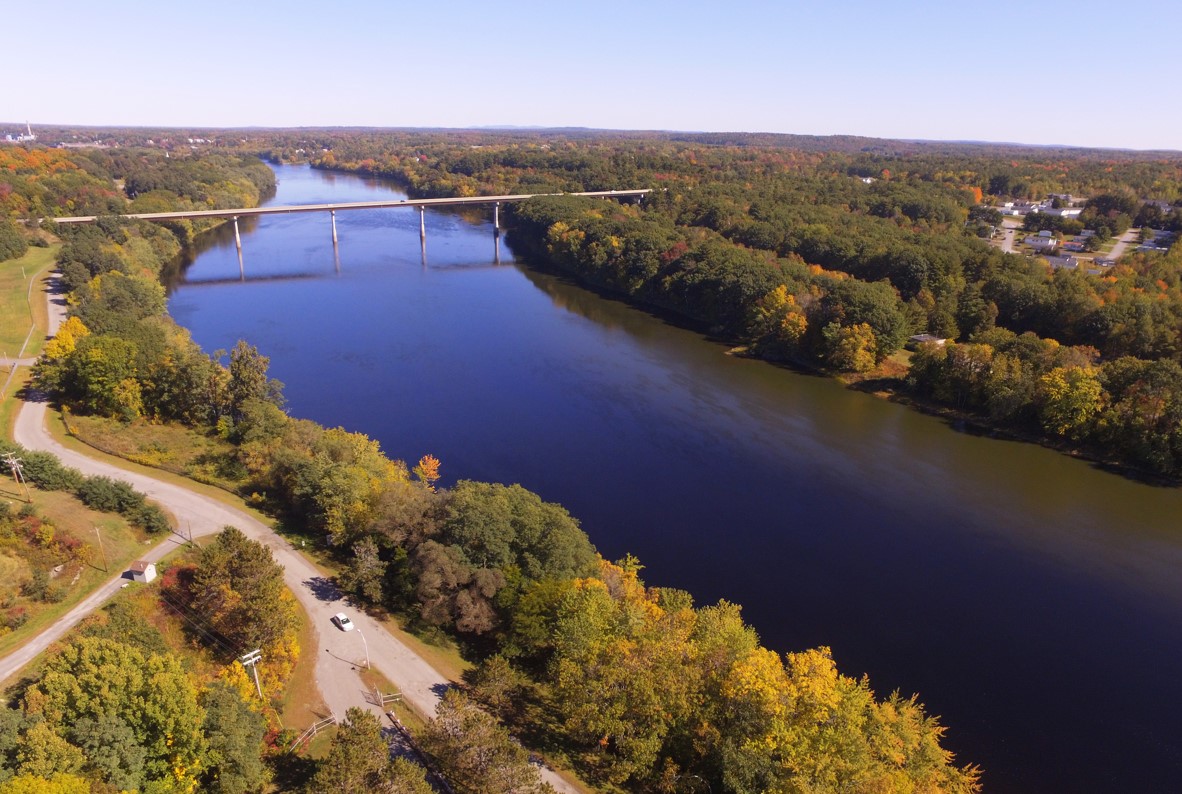
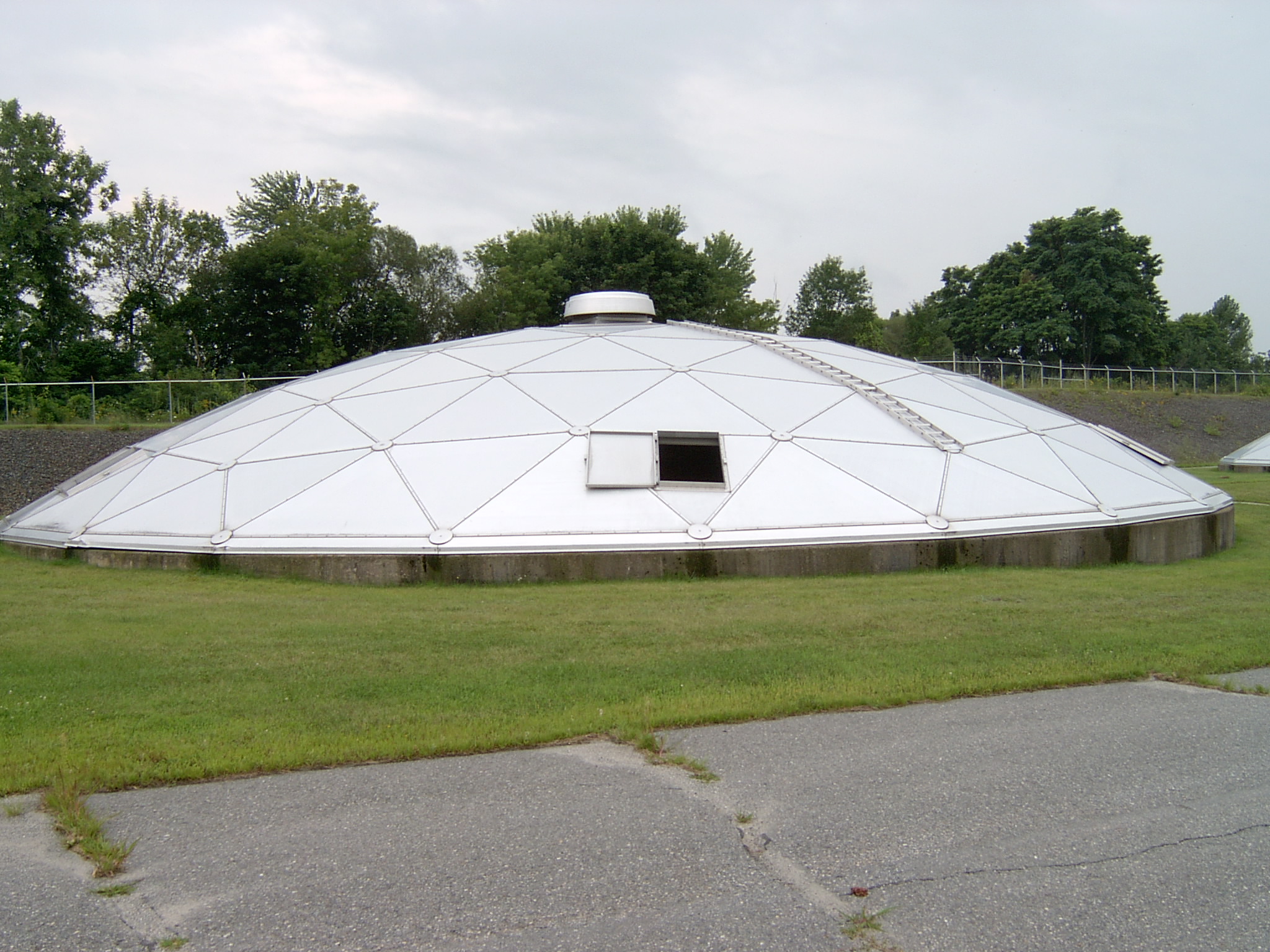
As required by our discharge permit, KSTD seasonally (April – September) disinfects the treated effluent with a small dose of sodium hypochlorite prior to discharge to Kennebec River. Sodium bisulfite is added to remove the chlorine residual just before the chlorinated water enters the discharge manifold. The purpose of the disinfection process is to eliminate any e-coli or other bacterium that may persist through the treatment process during the warmer months.
FAQ
Do you accept RV waste?
Yes! We accept RV Waste between 7:30a – 3:00p Monday through Friday. We are closed on weekends and holidays. Cost is $5 per load.
Do you offer tours for classes or groups?
Yes! Please contact the Superintendent or Chief Operator if you wish to schedule a tour of our facility for your class or group, of all ages! Come down and learn how wastewater is collected and treated before discharge to the Kennebec River.